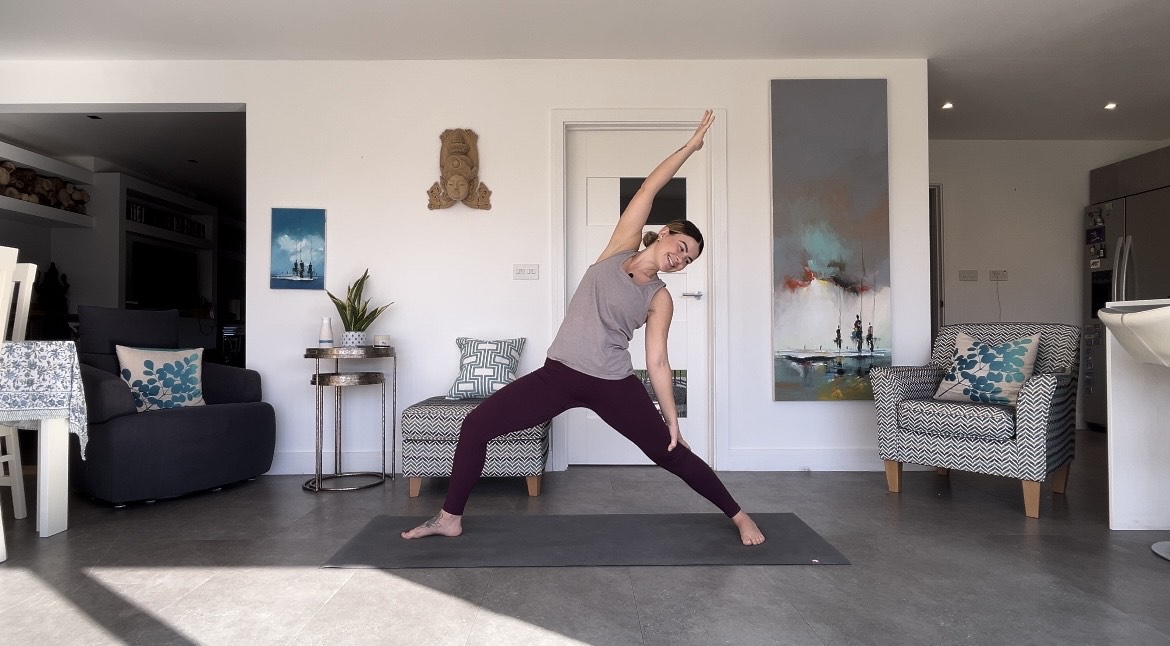
If you’re reading this, it probably means you’re thinking about trying yoga for the first time. Well, keep reading if you want to master the fundamentals that will get you started on your yoga journey!
Starting yoga as a beginner can be both exciting and challenging. To help you find your footing, I’ve put together a list of yoga poses for beginners specifically designed for those starting their yoga journey. These beginner-friendly yoga poses are not only accessible, but also offer plenty of opportunities for progression as you gain confidence and experience in your practice.
You may also find you learn more about yourself on this journey. As although yoga has many physical benefits for your body, it is also a path to self-discovery. It’s a practice that prompts you to acknowledge your thoughts and emotions, bringing mental clarity and a sense of calm. It strengthens your mental resilience and body awareness by teaching you to endure the physical discomfort of asanas through deep breathing (pranayama). All of which can help you learn to manage emotions and cope with stressful situations in everyday life.
Child’s pose (balasana) – A foundation of relaxation
Child’s pose is the perfect entry point for anyone new to yoga. It offers a soothing, grounding experience that helps you connect with your body and breath. This gentle yoga pose for relaxation can be a great starting point for your yoga journey as a beginner.
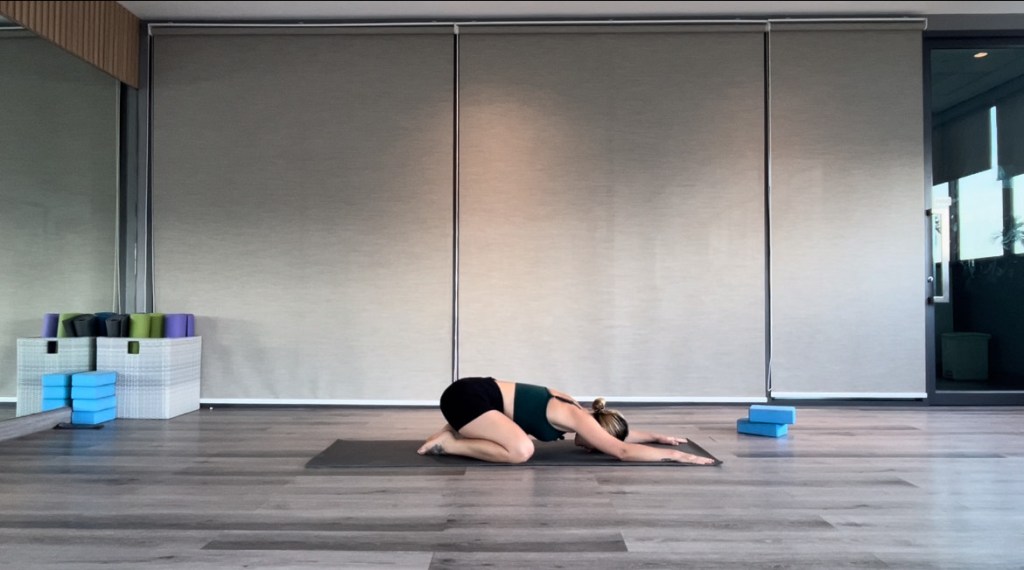
How to do child’s pose:
• Start in a kneeling position with your big toes touching and your knees wider than hip-width apart
• Sit back on your heels and extend your arms forward, palms come down to the mat
• Walk your hands forward and lower your forehead to the mat
• Relax your shoulders, close your eyes, and breathe deep
Modifications:
• If your hips are tight, place a cushion or folded blanket under your hips for added support
• If your forehead doesn’t reach the mat, use a yoga block or a book to rest your head on
Advancements:
• For a deeper stretch in the hips, walk your hands to one side, keeping the opposite hip grounded
• Lift your hips slightly off your heels to create a gentle backbend
• For a deeper shoulder stretch, bring the palms of your hands together and bend your elbows until thumbs are sat in the nape of the neck, keeping your elbows grounded
Downward dog (adho mukha svanasana): Building strength and flexibility
Downward dog is a foundational yoga pose that not only strengthens your body but also enhances flexibility. This versatile pose is a key component of many yoga practices for strength and yoga routines for flexibility.
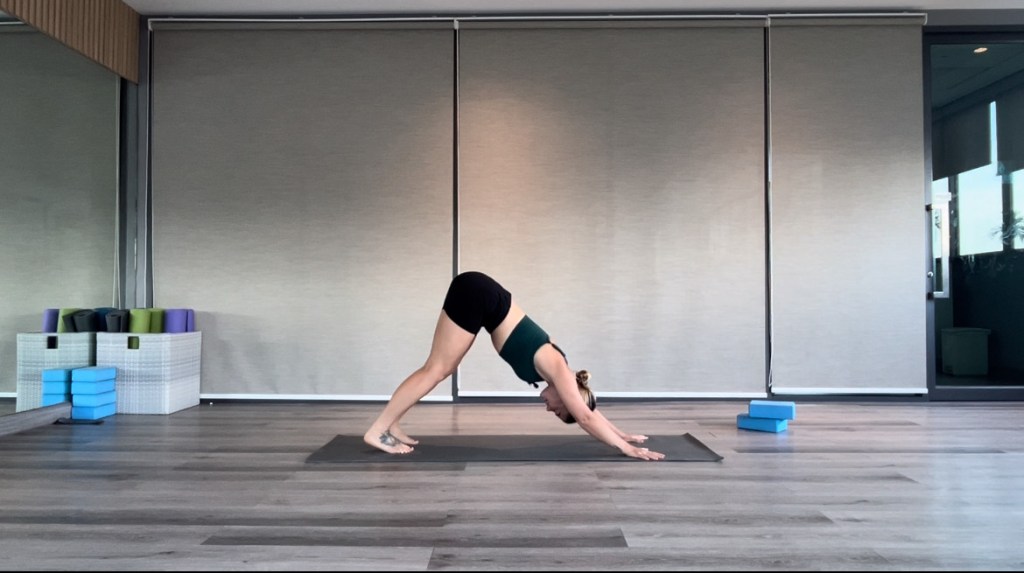
How to do downward dog:
• Start in a tabletop position, hands under shoulders and knees under hips
• Curl your toes under and lift your hips, forming an inverted “V” shape
• Press your palms into the mat and engage your core for lower back support
• Reach your heels down, it’s okay to keep a slight bend in the knees if your hamstrings are tight
Modifications:
• If your wrists hurt, spread your fingers wide to help distribute weight
• Put blocks or books under your hands to reduce the distance to the floor
• Bend your knees if you have tension in your lower back or hamstrings
Advancements:
• Lift one leg for three-legged downward dog, strengthening glutes and hamstrings
• Flow into plank pose and back to downward dog for a dynamic sequence
• Shorten the gap between your hands and feet for a deeper hamstring stretch
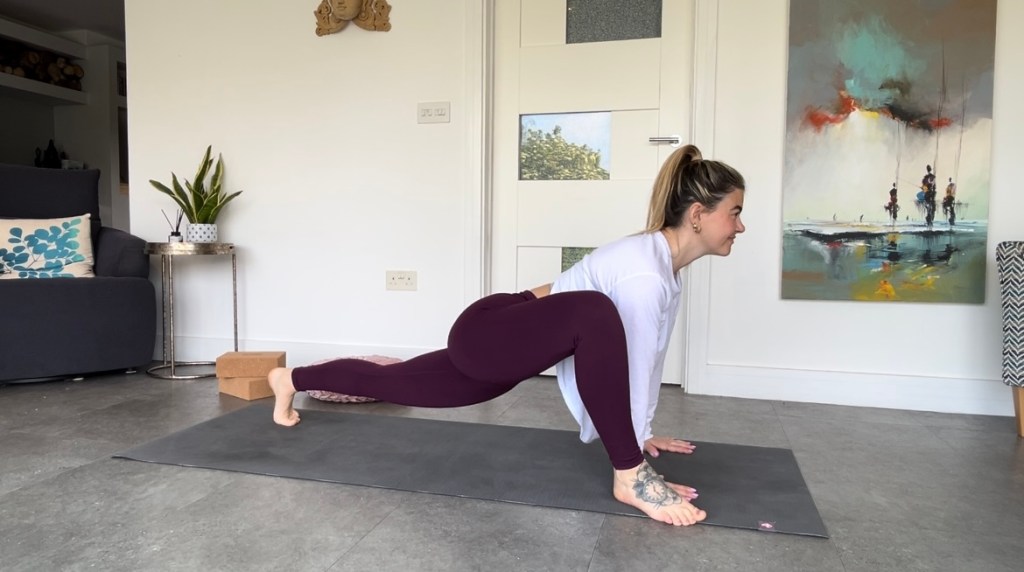
Low Lunge (anjaneyasana): Opening the hips
Low lunge (anjaneyasana) is an excellent pose for opening the hip flexors and building leg strength. It’s a key component of many yoga routines for hip flexibility.
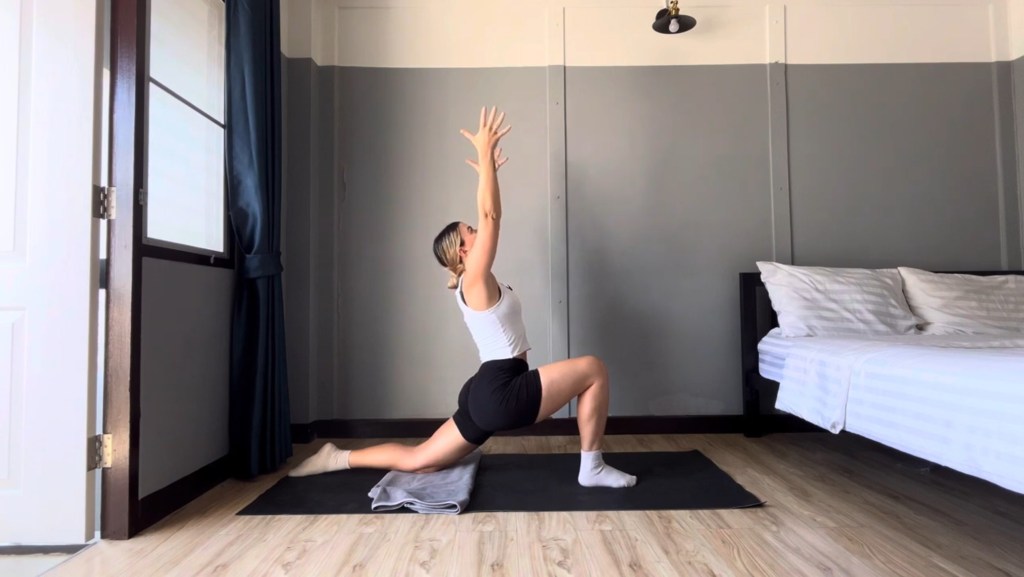
How to do low lunge:
• Start in downward dog
• Step your right foot forward between your hands
• Lower your left knee to the mat and untuck your toes
• Ensure your right knee aligns with the right ankle, and gently shift your hips forward
Modifications:
• If your knee feels sensitive, use a folded yoga mat or blanket for added cushioning
• Support your hands on blocks if reaching the floor is challenging
• For better balance, keep your hands on your front thigh or on blocks
Advancements:
• Lift your arms overhead, engaging your core for a deeper stretch and balance challenge
• Try a twist by bringing your right hand inside your right foot and reaching the left arm up
• Transition into Warrior one or Warrior two for a more advanced sequence from low lunge
Forward fold (uttanasana): Stretch and relax
Forward fold is a simple yet potent pose that stretches the hamstrings and spine and hips while promoting relaxation. It’s a staple in many yoga routines for hamstring flexibility and yoga practices for relaxation.
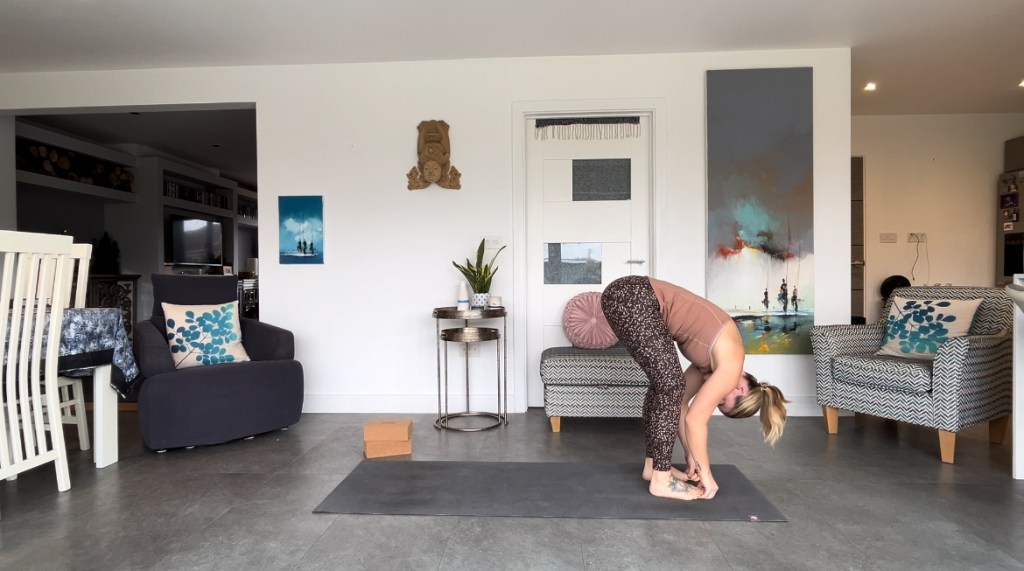
How to do forward fold:
• Stand with your feet hip-width apart, a slight bend in your knees
• Hinge at the hips and slowly lower your torso toward your thighs
• Let your hands hang down to the floor or grab your ankles or shins
• Relax your neck, allowing your head to hang heavy
Modifications:
• Use yoga blocks to support your hands to bring the ground up to you
• Bend your knees even more if your hamstrings are tight to avoid straining the lower back
• Put your hands on your thighs if reaching the floor is challenging
Advancements:
• Explore a rag-doll variation by holding opposite elbows and gently swaying side to side
• Gradually straighten your legs as flexibility improves
• Transition to a ‘half-way lift’ by lifting your torso halfway while keeping your back flat
Tree pose (vrksasana): Finding balance and focus
Tree pose introduces balance into your practice, enhancing focus, stability, and leg strength. It’s a popular choice for those seeking yoga poses for balance and yoga for focus.
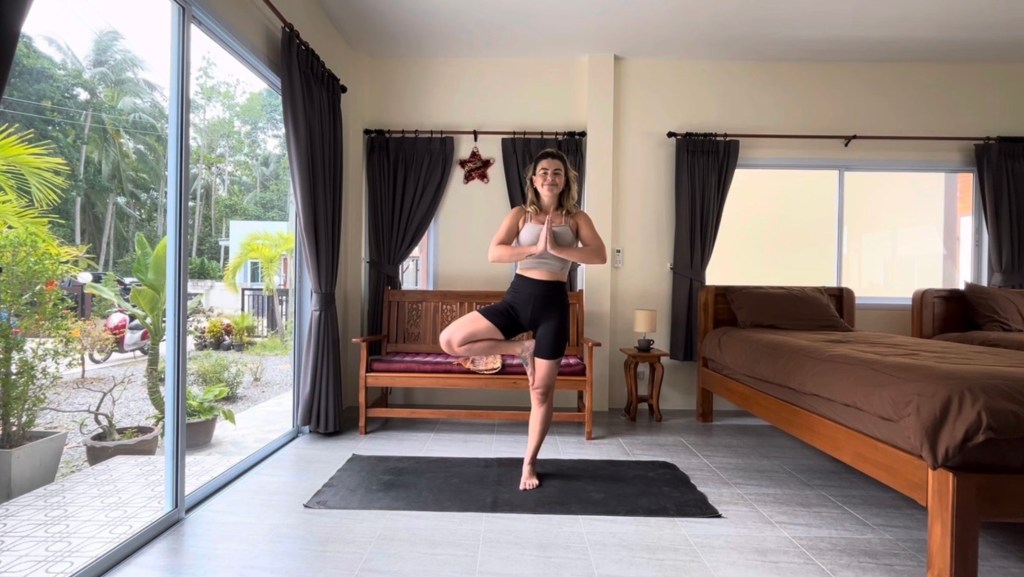
How to do tree pose:
• Begin in mountain pose (tadasana) with feet hip-width apart and arms at your sides
• Shift your weight to your left foot and lift your right foot off the ground
• Place the sole of your right foot on the inner left thigh, calf, or ankle (avoid the knee joint)
• Bring your hands to your heart center in prayer position or extend them overhead
Modifications:
• If balance is challenging, place your right foot on your ankle or calf instead of the inner thigh
• Utilize a wall or sturdy surface for support when needed
• Keep your toes on the floor as a beginner-friendly balance option
Advancements:
• Close your eyes to intensify balance and focus
• Experiment with various arm positions, such as reaching your arms overhead or out to the sides
• Progress from tree pose to warrior III or half moon pose for advanced balance sequences
Warrior II (virabhadrasana II): Strength and stability
Warrior II is a powerful standing pose that builds strength and stability in the legs and core, it’s a vital component of yoga routines for strength and yoga poses for stability.
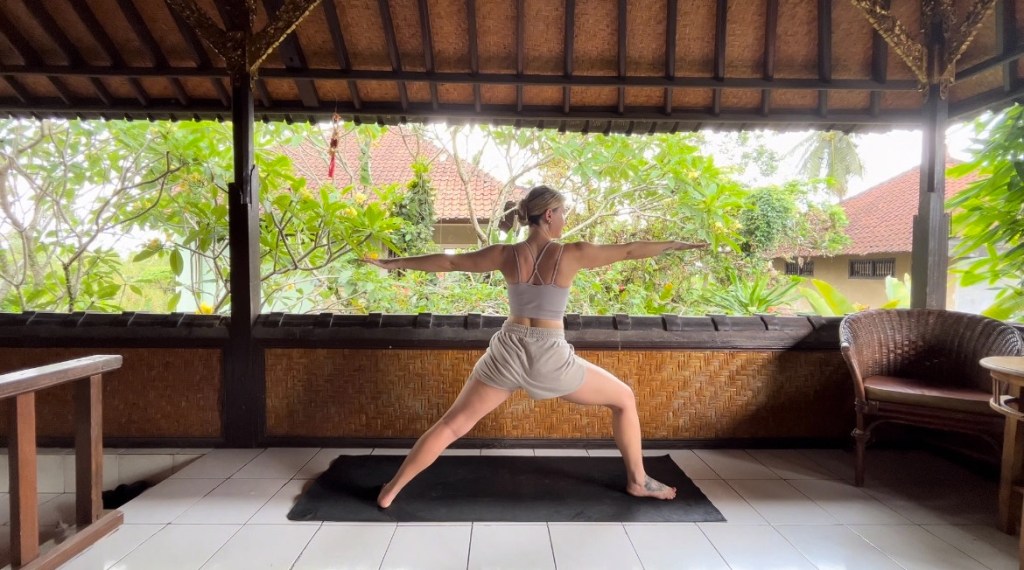
How to do warrior II :
- Begin in Mountain Pose (tadasana) with feet hip-width apart
- Step your right foot back and turn it slightly outward, about 90 degrees
- Bend your left knee, keeping it directly over your left ankle
- Extend your arms straight out to the sides, parallel to the ground
Modifications:
- Place your hands on your hips or rest them lightly on your front thigh if extending your arms feels challenging
- Adjust the distance between your feet for better balance and comfort
- Keep a slight bend in the back knee if you feel any discomfort
Advancements:
- Deepen the lunge in your front leg to increase the stretch
- Engage your core and gaze over your front hand for added intensity
- Transition from warrior II to other poses like triangle pose or side angle pose to create a flowing sequence
As you embark on your yoga journey as a beginner, these foundational poses will serve as your stepping stones to a deeper practice. Remember, yoga is a personal journey, and it’s essential to listen to your body, breathe mindfully, and embrace the transformative power of these poses. With time, dedication, and consistent practice, you’ll unlock the countless physical and mental benefits that yoga has to offer.

 KNOW YOGA with Jess
Leave a comment