At one point or another, we’ve all experienced tight or sore muscles. The most common causes for this are overuse, under-use, injury, and stress, and some of the more common areas on your body for this to occur are in your hips and hamstrings.
Why should you stretch your hips and hamstrings?
I won’t bore you with a detailed anatomy lesson of your hip and hamstrings! But both areas are made up of a bunch of different muscles, ligaments, and tendons that enable you to move around the way you do, and sometimes they can get tight or stiff for a number of reasons, keep reading to find out why.
The top of your femur (thigh bone) and hip joint are attached to your pelvis, which is the center part that connects the top half of your body the bottom half, so that you can stand upright! It is integral to keep the muscles in this area strong and flexible so you can move your body around in a normal and comfortable way.
So, why should you stretch your hips and hamstrings?
It is recommended to have a varied and regular movement routine to keep stiff hips and tight hamstrings at bay, this could include regular walking, strength training, cardiovascular exercise, and, of course, mobility and stretching exercises, like yoga. Practicing yoga to stretch and strengthen these muscles is an excellent way to keep your hips and hammies happy and healthy!
Stretching after exercise will release a buildup of lactic acid and increase blood circulation to the muscles, which will allow them to recover and repair, therefore reducing the feeling of sore muscles and preventing those pesky stiff hips and tight hamstrings.
Stress can also be a cause of tight muscles, particularly in your hips, as this is where we tend to store emotional stress. So, gentle hip stretches can be really beneficial for mental release as well as physical.
Dehydration can be a contributing factor to stiff or tight muscles, so make sure you are drinking plenty of fluid throughout the day to stay hydrated. It is generally recommended you drink somewhere around 2 liters of water a day; however, every body is different, so this may differ depending on your personal needs. If you are unsure, consult a doctor.
Other reasons for stretching can include improving mobility, flexibility, recovery from injury, or alleviating stiffness from long periods of sitting. For example, if you spend a long time sitting at a desk in an office or you drive for long periods of time, it’s important to take regular breaks and move your body to avoid stiffness, aches, and pains.
Whatever your reason for being here, below are 5 yoga poses to stretch and relieve tight muscles in your hips and hamstrings
Uttanasana (Standing Forward Fold)
Uttanasana is a deep forward bend that will stretch your glutes, adductors (inner thighs) hamstrings, calves, ankles and piriformis (lower back).
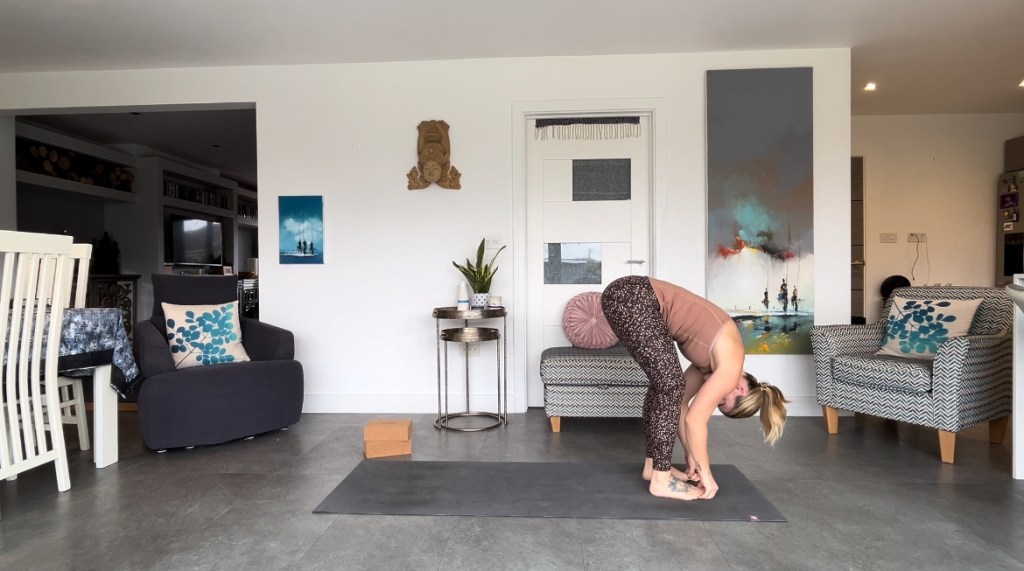
How to: Stand with feet hip-width apart, toes facing forward with a slight bend in your knees.Hinge forward at the hips, keeping your spine straight until your torso is parallel to the ground. If this is far enough, stay in this position and breathe. If you need more, continue to bow forwards until your torso is draped over your thighs, soften your joints, relax your neck, and breathe deeply.
Key alignment points: Keep your pelvis stacked over your heels, feet face forwards.
Modify: Widen your stance or place blocks (or books) under your hands for additional support.
Advance: Clasp your calves or ankles to actively pull yourself down and in, bringing your nose towards your knees. Stand on a block to increase the distance between you and the ground for a more intense stretch.
Anjaneyasana (Crescent or Low Lunge)
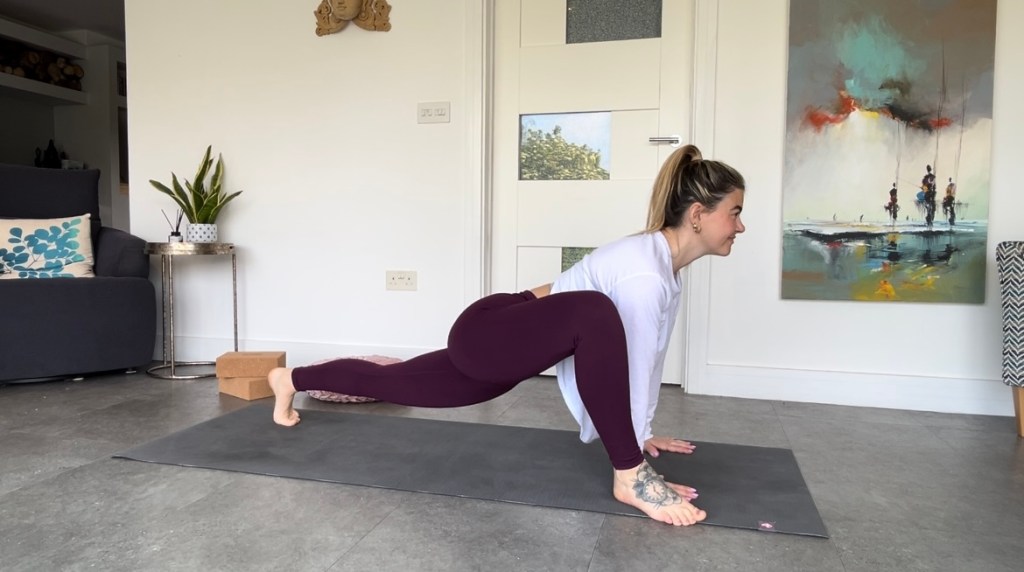
Anjaneyasana is an intense lunge that stretches your hip flexor, quadriceps, and your adductor muscles (inner thigh).
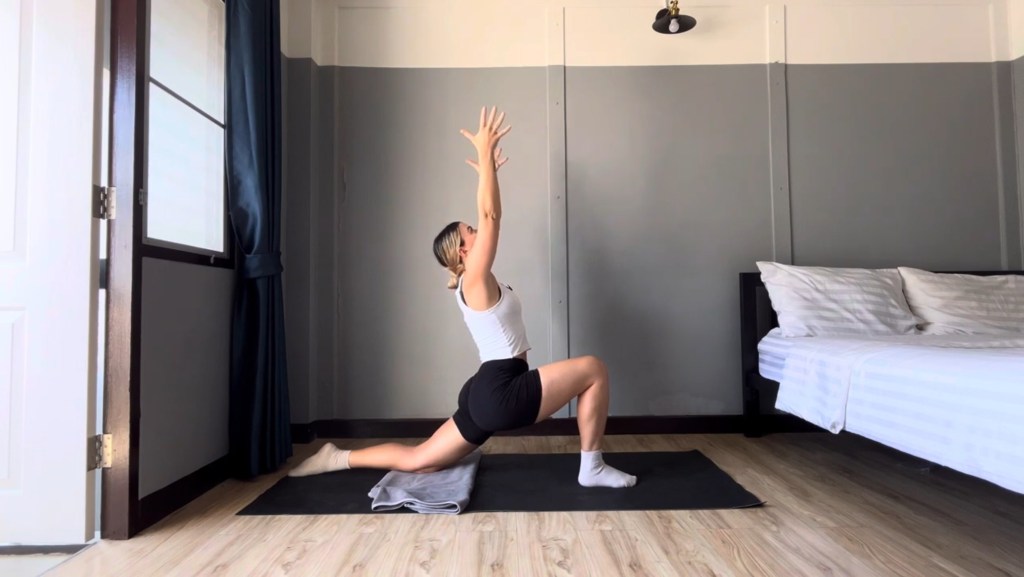
How to: From an all fours position (tabletop pose), step your right foot forward to land just on the inside of your right hand, toes facing forward. Slide your left knee back a little, then lift your torso to an upright position. Rest your hands on your right knee for stability, stay here and breathe deeply before switching to the left leg.
Key alignment points: Right knee stays stacked over right ankle, gently pull back your right hip to keep your pelvis in a neutral position.
Modify: Keep your hands on the ground or under blocks/books.
Advance: Slide your left knee back even further to intensify the stretch or incorporate a backbend by reaching your arms up and back, lifting your chin to take your gaze with you.
Parsvottanasana (Pyramid Pose)
An intense standing forward bend, pyramid pose will stretch your piriformis (lower back), hips, glutes, adductors, hamstrings, calves, and ankles.
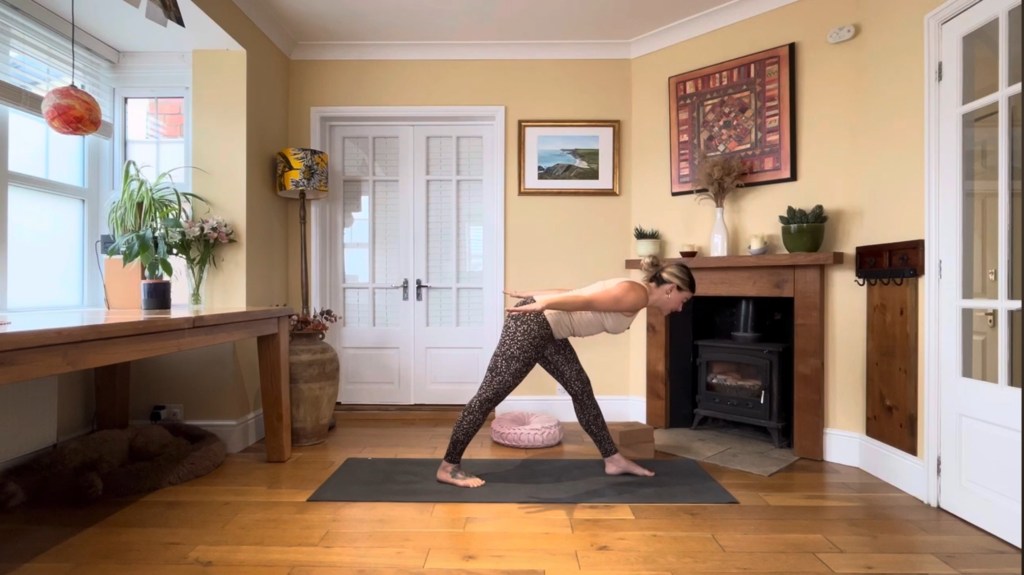
How to: Standing in Tadasana (mountain pose) with feet hip-width apart, step the left foot back a few feet behind you and turn your left toes out so your heel is at roughly a 40-45 angle, front knee is slightly bent. Place your hands on your hips and keep your spine straight as you slowly hinge forwards to bring your torso parallel to the ground. Stay here and breathe deeply, or continue folding forwards until your hands meet the ground before switching sides.
Key alignment points: Keep your pelvis in a neutral position by gently pulling the right side of your hip back to be in line with the left. Keep both feet hip-width apart; reduce the space between your feet length-ways if your back heel lifts as you fold.
Modify: Place blocks or books under your hands for stability. Use a wall behind you to help anchor your back heel down.
Advance: Widen the gap between your feet. Drape your torso over your front thigh, bring your nose towards your knee. Take your hands to reverse prayer for an additional stretch in your shoulders, chest, and arms.
Kapotasana (Pigeon Pose)
A passive seated pose that targets your hip flexor, piriformis (lower back), adductors (inner thigh), quadriceps, hamstrings, and glutes.
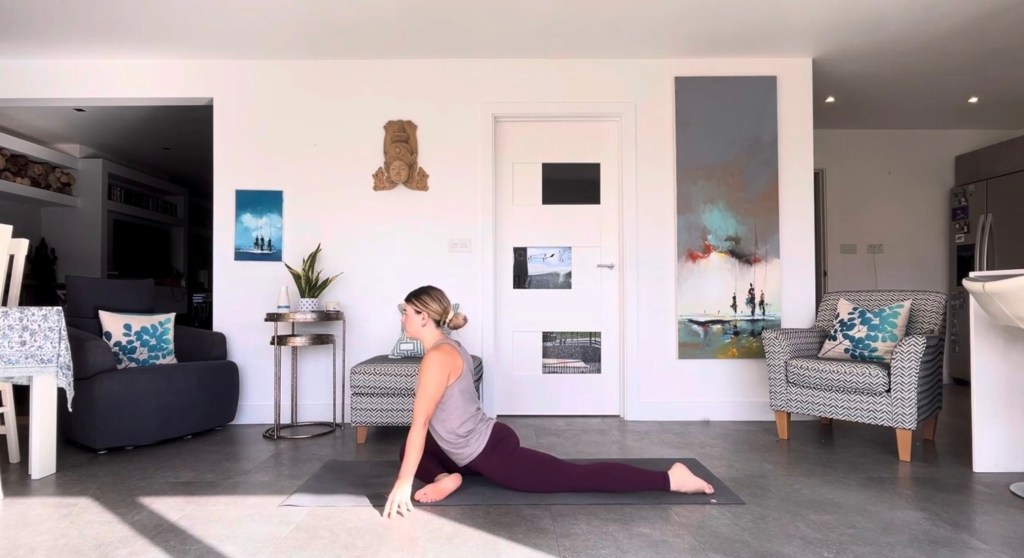
How to: From an all fours (tabletop) position, bring your right knee forward and place it down by your right wrist, then swing that ankle out towards your left wrist, so your leg is close to a 90-degree angle. Keeping your back leg straight, shift it back slightly so you can rest your hips down. Keep your fingertips on the mat and your torso in an upright position with a nice straight spine, stay here and breathe deeply before switching sides.
Key alignment points: Stay on the top of the back of your left thigh to keep your pelvis in a neutral position. Keep your right foot flexed. Keep your spine straight and draw your shoulder blades together.
Modify: Place a block, book, or pillow under your right hip or under your hands for extra support. Pull your right heel in towards your body.
Advance: Fold your torso forwards until your forehead meets the ground for supta kapotasana (sleeping pigeon) or alternatively for an added quad stretch/backbend variation, bend your left knee up and in towards your body, reach your hands up and behind you until you can grab that foot for Eka Pada Rajakapotasana (king pigeon).
Trikonasana (Triangle Pose)
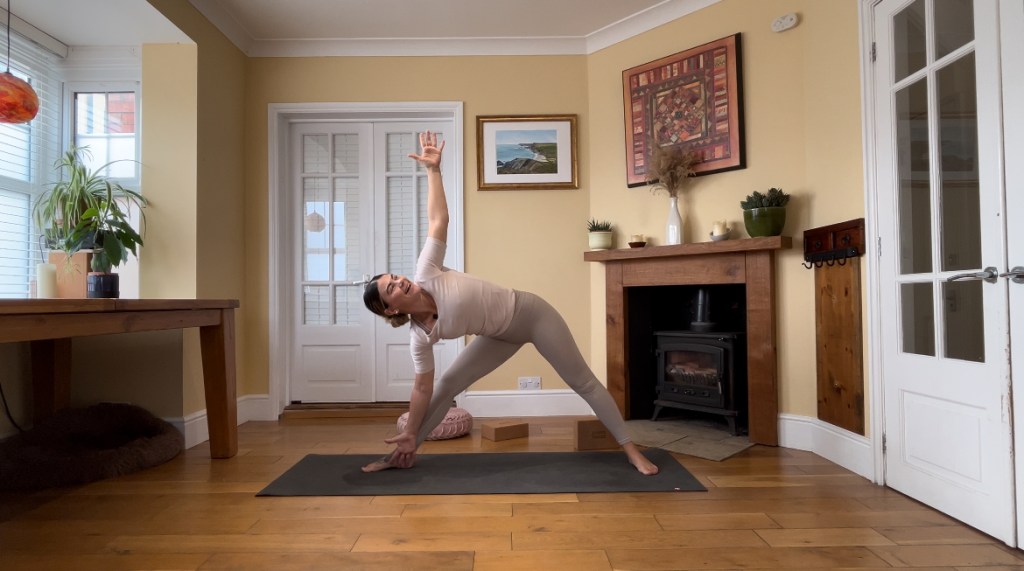
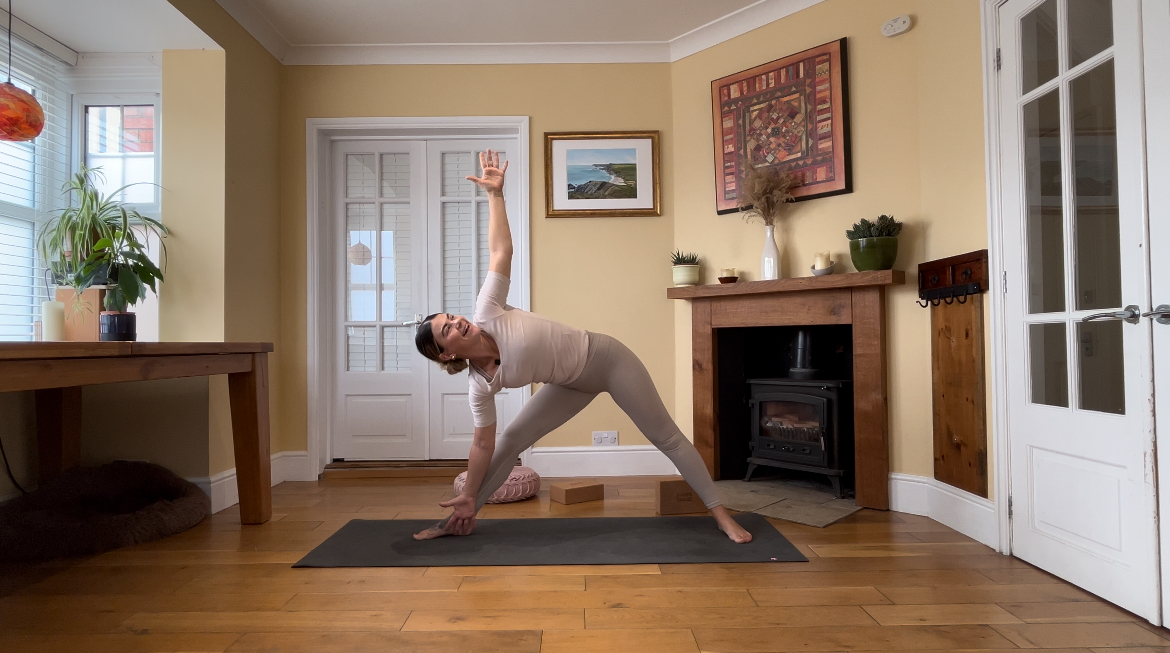
Trikonasana is a standing posture with a side bend from the hip. It will stretch your glutes, hips, piriformis (lower back), hamstrings, adductors (inner thigh), quadriceps, and calves.
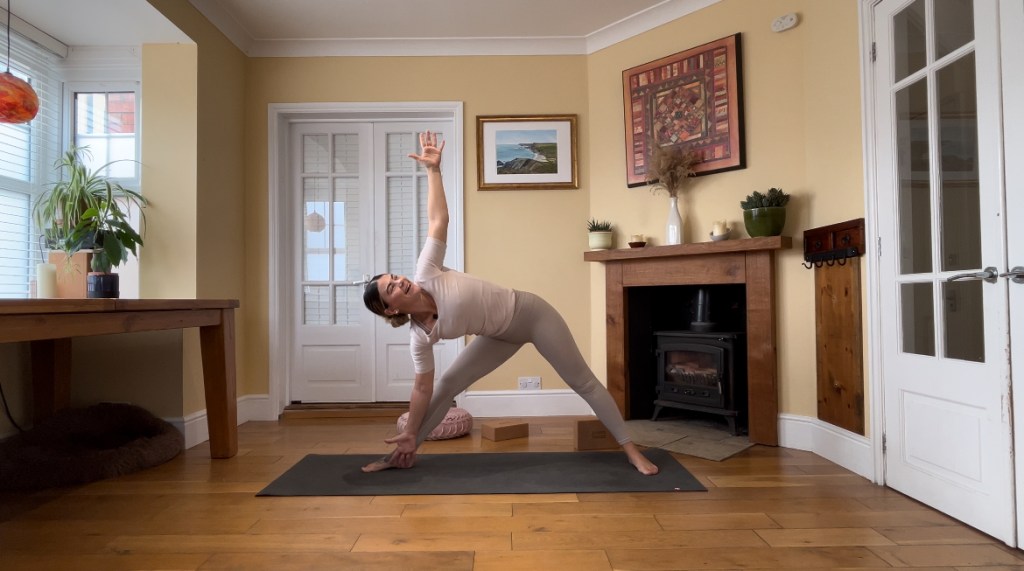
How to: From tadasana, take your feet wider than hip width apart with a micro-bend in your knees, turn your right foot out 90 degrees to the right. Extend your arms out side-to-side with hands in-line with your shoulders. With your torso facing forward and start to lean towards the right, leading with your right hand. When you can’t lean any further, bend laterally from your hip, taking your right hand down to rest on your right ankle with your left hand reaching up towards the sky. Take your gaze up to the sky, stay here and breathe deeply before switching sides.
Key alignment points: Make sure you’re bending sideways from your hip and not from your spine. Your pelvis and torso are facing forwards; keep your spine straight to avoid leaning forwards or backward.
Modify: Rest your right hand on your shin or place it on a block or a book if you can’t reach your ankle.
Advance: Take your hand down the ground on the inside of your right foot for a more intense stretch or bring your left hand down to the ground, revolve your torso so you’re facing the back half of your body and lift your right hand up to the sky for Parivrtta Trikonasana (revolved triangle).
And that’s it, 5 great yoga based stretches for you to take away and incorporate into your regular movement routine to help relieve your stiff hips and tight hamstrings!
It is advised to warm up your muscles before performing any stretches to avoid strain or injury. Consult a doctor before undertaking any form of exercise, especially if you have any pre-existing conditions or injuries that could be contraindicated.

 KNOW YOGA with Jess
Leave a comment